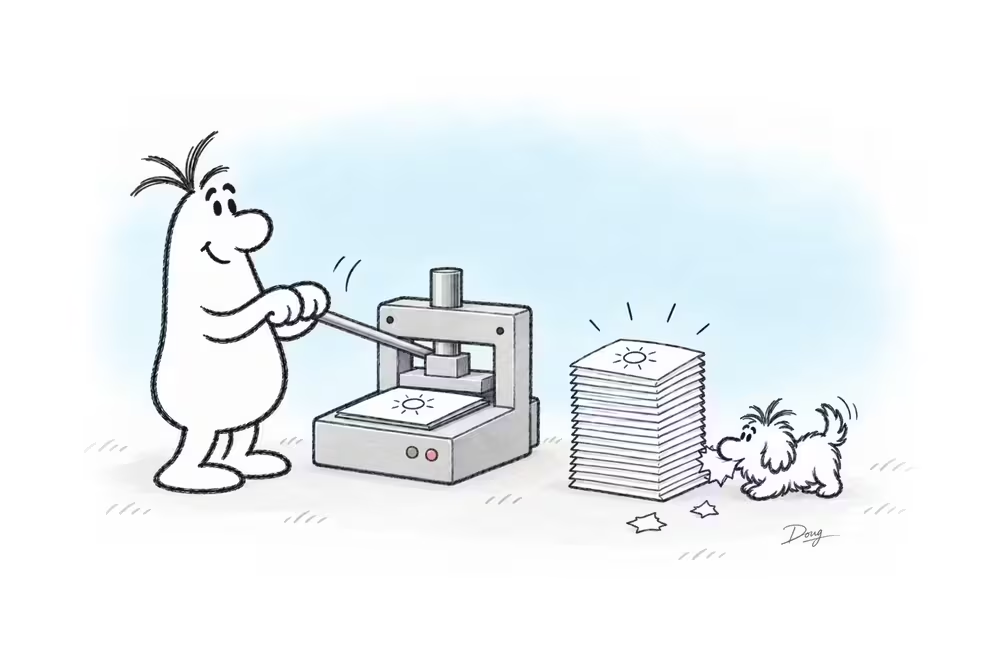

Print with purpose
Choose formats, quantities and production methods according to what the project genuinely needs.
We design printed communications with the finished object and its environmental impact considered together. Format, materials, quantities, finishes, production methods and suppliers all influence the resources a project uses. More than 20 years of print and production experience helps us make informed choices at each stage, while maintaining the quality, character and practical requirements of the work.
Many of the decisions that determine the environmental impact of print are made before anything reaches the press.
Size and format affect paper use. Material and finishing choices influence recyclability and production processes. Quantities determine waste. Where something is produced affects transport. Even apparently small decisions can have consequences when a project is reproduced at scale.
We consider these factors alongside the creative brief from the beginning. Sometimes a simple change in format, stock, finish or production method can reduce material use without altering the idea or diminishing the finished piece.
Our experience of print production also means we understand what happens after the artwork leaves the studio. We can specify appropriately, talk directly to suppliers and make decisions based on how something will actually be manufactured.
Choose formats, quantities and production methods according to what the project genuinely needs.
Specify appropriate papers, inks, finishes and materials, with consideration given to provenance, production and end of life.
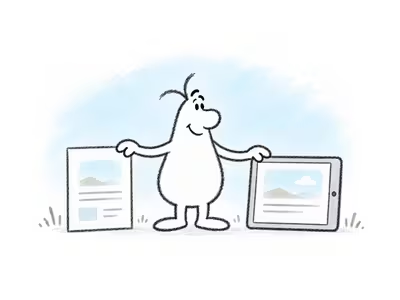
Plan physical and digital communications together so each medium is used where it adds the most value.
Consider legibility, hierarchy, language and usability alongside materials and production.
A considered approach to print can help organisations:
• Reduce unnecessary material use and waste • Make more informed choices about papers, finishes and production methods • Demonstrate responsible procurement within wider sustainability commitments • Improve consistency through reusable design systems and specifications • Work with suppliers whose environmental standards can be understood and evidenced • Balance production quality, budget and environmental considerations more effectively
We have spent many years building relationships with printers and production specialists whose work we know and trust. Alongside quality, service and technical capability, we consider the environmental standards, materials and processes available through those suppliers.
Depending on the requirements of the project, this can include:
• FSC® certified and responsibly sourced papers • Recycled and lower-impact paper options • Papers manufactured in European mills • Unbleached and chlorine-free stocks where appropriate • Lower-chemistry or processless plate-making • Vegetable-based inks where suitable • Recycled and reduced packaging • Suppliers taking practical steps to reduce transport and operational emissions
The right specification will vary from project to project. Our role is to understand the options, ask the right questions and help clients make choices that balance environmental impact, quality, cost and the demands of the finished work.
Whether you are commissioning a new identity, website, campaign or piece of print, BakerWilcox brings experienced creative thinking together with a practical understanding of environmental impact.
If you are looking for a design partner who can deliver excellent work while helping your organisation make more responsible choices, we would be pleased to hear what you are working on.

